
Coffee Exports Enter a Period of Strategic Adjustment
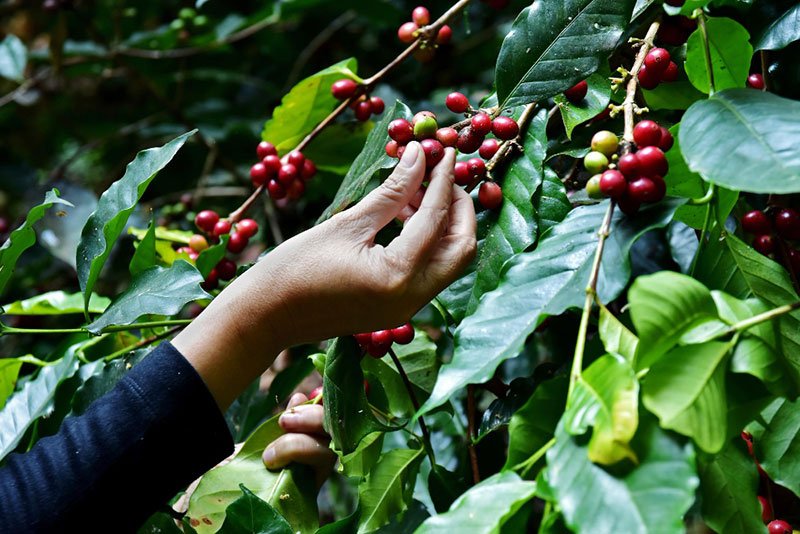
Vietnam is one of the world’s leading coffee-producing and exporting countries, with its industry playing an important role in rural livelihoods, agricultural trade and international coffee supply chains.
Robusta coffee remains a major strength, supplying manufacturers of instant coffee, espresso blends and a wide range of commercial coffee products. At the same time, growing consumer interest in specialty coffee, differentiated origins and convenient coffee formats is creating opportunities to expand beyond traditional bulk exports.
In 2026, the industry’s outlook has been shaped by changes in international prices, production expectations and increasingly demanding requirements from major importing markets.
Data for the first half of 2026 showed that Vietnam exported approximately 1.1 million tonnes of coffee, generating around US$4.78 billion in export revenue. While export volume increased by 9.7% year on year, export value declined by 14.4%, reflecting a fall in average export prices.
The industry nevertheless remains optimistic about the potential for stronger performance through the second half of the year, supported by improved supply conditions and growing investment in higher-value processing. Sources: Vietnam News and Vietnam News Business Hub
International Prices and Supply Conditions Influence Revenue
Coffee prices are influenced by a combination of global supply and demand, weather conditions in major producing countries, inventory levels, currency movements and market expectations.
Changes in production forecasts can affect prices well before the full harvest reaches international markets. Similarly, strong demand does not necessarily translate into higher export revenue if market prices decline sufficiently.
The first-half performance in 2026 demonstrates this distinction between volume and value. Larger shipment volumes can coexist with lower export earnings when average prices fall.
For the industry, this highlights the importance of managing commercial risks alongside production and sales activities.
Exporters and buyers need to evaluate procurement timing, delivery commitments, inventory requirements and pricing arrangements carefully. Better access to market information can support more informed decisions and reduce the risks associated with sudden price fluctuations.
For farmers, production planning and appropriate post-harvest practices remain essential to maintaining product quality and economic resilience.
Value-Added Processing Creates New Opportunities
One of the most significant opportunities for Vietnam’s coffee industry is the development of products that capture more value beyond the export of green coffee beans.
Roasted coffee, ground coffee, instant coffee, coffee extracts and other processed formats can serve different customer needs across retail, hospitality and food manufacturing.
Processing can help diversify revenue streams and create opportunities to develop products with more distinctive characteristics. It can also allow the industry to participate in additional stages of the global coffee value chain.
However, moving into processed coffee requires investment in equipment, product development, packaging, food safety management and quality assurance. International markets may also impose specific requirements concerning labeling, shelf life, ingredient declarations and packaging materials.
Success depends on understanding the target customer and selecting a product format that meets actual demand. Expanding processing capacity without a clear market strategy can increase costs without producing a corresponding improvement in profitability.
For this reason, product development should be closely linked to market research, buyer feedback and distribution opportunities.
Sustainability and Farm-Level Traceability Become More Important
Environmental responsibility is becoming an increasingly significant consideration in international coffee trade. Buyers are paying greater attention to the origins of agricultural raw materials, land-use practices and the ability to demonstrate compliance with environmental requirements.
The European Union Deforestation Regulation, commonly known as EUDR, is particularly relevant to coffee supply chains serving the European market. Under the applicable framework, covered products must meet requirements intended to ensure they are not associated with deforestation or forest degradation after the specified cutoff date.
The European Commission currently lists 30 December 2026 as the application date for large and medium-sized operators, with 30 June 2027 for micro and small operators, subject to the regulation’s detailed provisions and applicable exceptions. The legal obligations primarily apply to relevant operators and traders placing covered products on the EU market, but these requirements also affect suppliers outside Europe. Source: European Commission
For Vietnam’s coffee industry, preparing for these requirements involves strengthening production-area records, geolocation data, supply chain documentation and systems for verifying the origin of coffee beans.
The practical challenge is significant because coffee often passes through multiple stages between farms and export shipments. Reliable traceability requires coordination among farmers, collectors, processors, warehouses and trading partners.
Digital Systems Can Improve Supply Chain Transparency
Digital traceability offers a way to organize information about production locations, harvests, processing batches and product movements.
When implemented effectively, these systems can improve documentation accuracy, support quality investigations and make it easier to demonstrate compliance with buyer requirements.
However, technology alone cannot solve every traceability challenge. Data must be accurate, regularly updated and supported by suitable verification procedures.
Smallholder farmers may require technical assistance and practical tools to record information consistently. Shared systems and coordinated industry initiatives can help reduce the burden of compliance while improving access to international markets.
Traceability can also provide benefits beyond regulatory compliance. Buyers may gain greater confidence in product origin, while producers can better understand the characteristics and quality of the coffee they supply.
Climate Adaptation and Product Quality
Coffee production is sensitive to temperature, rainfall patterns, water availability and changing seasonal conditions. Climate-related pressures can influence yields, bean development and the consistency of supply.
Improved farm management, suitable cultivation practices and efficient water use can help reduce some of these risks. Better harvesting, drying and storage practices are equally important to preserving coffee quality after the crop leaves the farm.
As buyers become more selective, consistent quality can help distinguish Vietnamese coffee in competitive international markets.
Opportunities also exist in specialty and differentiated coffee segments, where origin, processing methods, flavor characteristics and sustainability credentials may influence purchasing decisions.
These segments require careful quality management and clear communication with buyers, but they can create additional pathways for value creation.
Outlook: Combining Quality, Processing and Transparency
Vietnam’s coffee industry has significant strengths in production capacity, established international trade relationships and experience serving diverse markets.
Its next phase of development will depend increasingly on the ability to manage price volatility, expand suitable processing activities and maintain reliable traceability.
Higher export volume remains valuable, but long-term competitiveness requires more than supplying large quantities of coffee beans. Consistent quality, credible environmental documentation and products aligned with evolving consumer preferences will be important to sustaining market access and improving the industry’s position in the global value chain.