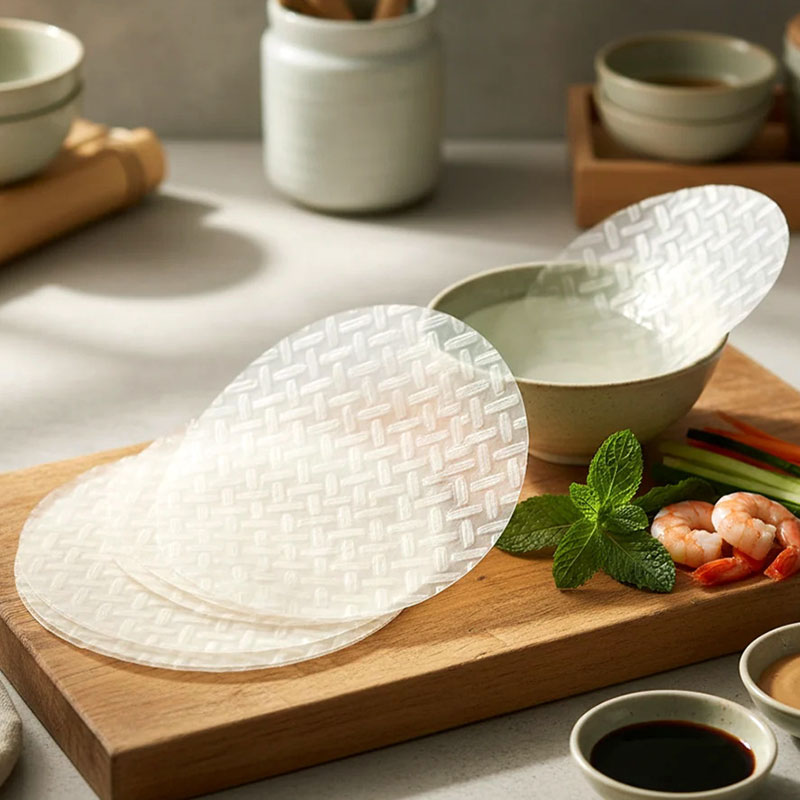
Vietnamese Rice Paper (Banh Trang) is a traditional rice-based wrapper used for fresh and fried spring rolls. Available in round, square, and rectangular formats, it comes in different sizes and packaging options to meet retail, foodservice, and food manufacturing requirements. iiGlobal supports sourcing and export coordination for Vietnamese Rice Paper through local suppliers.
Vietnamese Rice Paper, also known as Banh Trang or Vietnamese Spring Roll Wrappers, is a traditional rice-based food product widely used in Vietnamese and Asian cuisine. Made into thin, dried sheets, rice paper is valued for its convenience, versatility, and ability to wrap a variety of ingredients. It is an essential component of popular dishes such as fresh spring rolls (Goi Cuon) and fried spring rolls (Cha Gio or Nem Ran).
Vietnam is well known for its diverse rice paper varieties, with different recipes, shapes, sizes, and textures developed to suit regional cooking traditions. Today, Vietnamese rice paper is also supplied to international food distributors, retailers, restaurants, and food manufacturers looking for authentic Asian ingredients.
iiGlobal sources and distributes Vietnamese Rice Paper through local supply partners, supporting buyers with product selection, packaging options, and export coordination according to their market requirements.
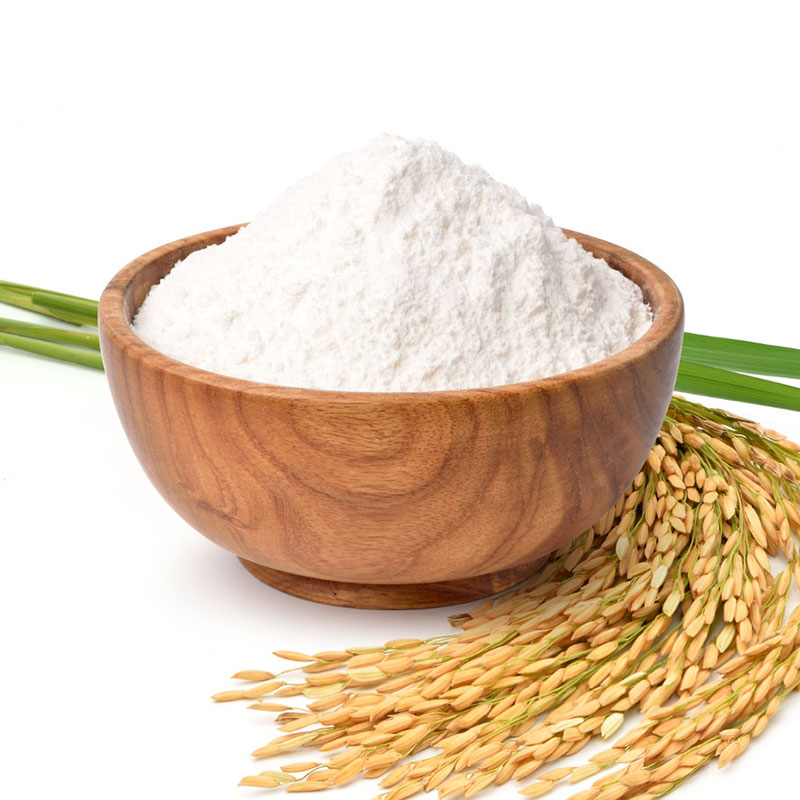
Vietnamese Rice Paper is a thin, edible sheet produced from a prepared starch-based mixture, commonly containing rice flour or rice starch, tapioca starch, water, and salt. Depending on the recipe, some products may use rice as the primary ingredient, while others incorporate tapioca starch to achieve greater flexibility, elasticity, or crispness after frying.
Traditionally, the mixture is spread into thin sheets, steamed or cooked, and then dried. Modern production may use controlled drying systems to improve consistency in sheet thickness, appearance, moisture level, and packaging quality.
Rice paper is generally supplied in a dry, crisp condition. For fresh spring rolls, the sheets are briefly moistened with water until they become flexible enough to wrap fillings. For fried spring rolls, buyers select a suitable wrapper formulation that can develop a crisp, golden exterior after cooking.
Vietnamese Rice Paper can be categorized according to its intended culinary application.
1. Fresh Spring Roll Rice Paper
Fresh Spring Roll Rice Paper is designed for dishes such as Vietnamese Goi Cuon and other fresh or cold rolls. After brief contact with water, the sheets become soft, pliable, and slightly chewy, allowing them to wrap vegetables, herbs, rice vermicelli, seafood, meat, and other fillings without easily tearing.
This variety is suitable for Asian restaurants, foodservice operators, retail distribution, and manufacturers of ready-to-prepare spring roll kits.
2. Fried Spring Roll Rice Paper
Fried Spring Roll Rice Paper is used for Vietnamese Cha Gio, Nem Ran, and other fried roll products. The wrapper is selected for its ability to hold fillings during preparation and develop a crisp texture when deep-fried.
Depending on the recipe and product design, fried spring roll wrappers may have a different rice-to-tapioca ratio and sheet structure from fresh-roll varieties. Buyers should evaluate the finished texture, color, blistering, and resistance to cracking through product samples before confirming an order.
3. Other Rice Paper Variations
Depending on supplier availability, Vietnamese Rice Paper may also be offered in different colors, formulations, and shapes. Products made with natural vegetable ingredients or other added components can serve specialized retail and foodservice applications. These variations should be specified separately because their ingredients, appearance, and technical properties may differ from traditional white rice paper.
Vietnamese Rice Paper is valued for its thin sheet structure, convenient storage, and versatility in food preparation. Depending on the selected type, its main characteristics include:
Typical applications include Vietnamese fresh spring rolls, fried spring rolls, Asian appetizers, restaurant menus, ready-to-cook food products, and retail grocery products.
Vietnamese Rice Paper can be supplied in various dimensions to accommodate different recipes and serving portions. Common round sizes include approximately 16 cm, 18 cm, 19 cm, 22 cm, and 30–31 cm. Square and rectangular formats may also be available.
Packaging options commonly include 100 g, 200 g, 250 g, 300 g, 400 g, 500 g, and 1 kg bags. Larger foodservice packs, carton configurations, and customized retail packaging can be considered depending on the supplier and order volume.
The actual number of sheets per kilogram depends on sheet diameter, thickness, and product formulation. Buyers should confirm the required dimensions, sheet count, and net weight before placing an order.
The following table provides general reference information for Vietnamese Rice Paper. These values are indicative market references, not guaranteed iiGlobal product specifications. Actual parameters depend on the selected variety and supplier.
| Parameter | Indicative Information |
|---|---|
| Product Name | Vietnamese Rice Paper / Spring Roll Wrappers |
| Origin | Vietnam |
| Main Ingredients | Rice flour or rice starch, tapioca starch, water, salt |
| Shape | Round, square, or rectangular |
| Common Sizes | 16 cm, 18 cm, 19 cm, 22 cm, 30–31 cm |
| Color | White or natural off-white; other colors subject to availability |
| Moisture | Around 15% maximum in some supplier specifications |
| Packaging | 100 g–1 kg retail bags; bulk or customized packaging |
| Shelf Life | Commonly 12–24 months, subject to supplier confirmation |
| Storage | Keep sealed in a cool, dry place, away from moisture and direct sunlight |
Final specifications, including ingredient composition, moisture, sheet dimensions, microbiological criteria, packaging materials, and shelf life, should be confirmed through the supplier’s technical data sheet (TDS), Certificate of Analysis (COA), and approved product samples.
For international distribution, rice paper quality should be assessed through appearance, sheet uniformity, flexibility, breakage rate, moisture level, and performance during preparation or frying. Products should be free from visible mold, foreign matter, unusual odors, and packaging defects.
Importers should also verify ingredient declarations, allergen information where relevant, food-contact packaging compliance, microbiological requirements, and applicable regulations in the destination market. Any claims such as gluten-free, preservative-free, non-GMO, or additive-free should be supported by supplier documentation and the actual product formulation.
iiGlobal JSC supports international buyers seeking Vietnamese agricultural and processed food products, including Rice Paper for fresh and fried spring rolls.
We coordinate with local suppliers to discuss product varieties, sheet sizes, ingredients, packaging formats, and export requirements. Whether you are sourcing rice paper for retail distribution, Asian foodservice, or food manufacturing, iiGlobal can support your inquiry with product information and supply coordination.
Contact iiGlobal to discuss your Vietnamese Rice Paper requirements, request product specifications, and explore suitable export solutions for your market.
There are no reviews yet.